
Buy 3-MMC 200MG Pellets
Price range: €25.00 through €100.00
Certified ≥99.0% pure 3-MMC hydrochloride pellets (200 mg) for forensic toxicology and in vitro research. Strictly laboratory use. Fast, discreet EU shipping from Pharma Research .eu.
| Quantity |
5 Pellets ,10 Pellets ,25 Pellets |
|---|
Buy 3-MMC 200MG Pellets for Advanced Laboratory Research in Europe
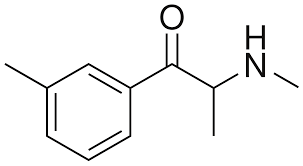
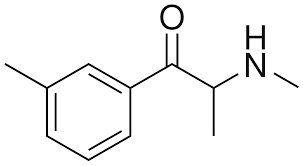
3-MMC (3-methylmethcathinone) represents a critical synthetic cathinone reference standard for contemporary forensic toxicology and analytical chemistry laboratories across the European Union. As regulatory frameworks evolve and novel psychoactive substances proliferate, access to rigorously characterised analytical standards becomes indispensable for method validation, mass spectral library development, and confirmatory analysis workflows. Pharma Research .eu serves as the definitive European source for this high-purity compound, supplying qualified laboratory professionals with batch-certified material that meets the exacting demands of publishable research and regulatory compliance.pubchem.ncbi.nlm.nih+2
Uncompromising Purity and Analytical Characterisation
Every batch of 3-MMC 200MG Pellets supplied by Pharma Research .eu is guaranteed to exhibit a minimum purity of ≥99.0% as verified by high-performance liquid chromatography (HPLC) with UV detection, complemented by orthogonal confirmation via gas chromatography–mass spectrometry (GC-MS) and proton nuclear magnetic resonance (¹H-NMR) spectroscopy. This multi-modal analytical approach ensures that the stated purity reflects not merely chromatographic homogeneity but genuine chemical identity and structural integrity.pubchem.ncbi.nlm.nih+1
Each shipment is accompanied by a comprehensive Certificate of Analysis (CoA) that documents batch-specific analytical data, including the HPLC chromatogram with retention time, mass spectral fragmentation pattern, and NMR chemical shift assignments. The CoA further specifies residual solvent analysis conducted in accordance with ICH Q3C guidelines, confirming that levels of dichloromethane, acetonitrile, methanol, and other process solvents remain below permitted daily exposure thresholds. Heavy metal content is quantified via inductively coupled plasma mass spectrometry (ICP-MS), with limits set at ≤10 ppm for lead, ≤5 ppm for arsenic, ≤5 ppm for cadmium, and ≤5 ppm for mercury, aligning with European Pharmacopoeia general chapter 5.20 requirements for analytical reference materials.fishersci.co+2
The compound is supplied as off-white to pale cream-coloured compressed pellets, each containing precisely 200 mg of 3-MMC hydrochloride salt. This pelletised format offers distinct advantages over loose powder: it minimises handling errors, reduces cross-contamination risk during weighing, and provides a physically stable form that resists caking or agglomeration even under suboptimal storage conditions. The pellet morphology is verified via optical microscopy and scanning electron microscopy (SEM) during quality control, ensuring uniform size distribution and consistent dissolution kinetics when reconstituted for analytical use.rawchems
This level of purity and physical characterisation is non-negotiable for reproducible, publishable research outcomes. Lower-grade industrial reagents—often marketed at 95–97% purity with inadequate documentation—introduce unacceptable uncertainty into quantitative workflows. In forensic toxicology, where results may withstand legal scrutiny, or in pharmacological in vitro assays where subtle impurities can confound receptor-binding data, only analytically certified material suffices. Pharma Research .eu’s commitment to ≥99.0% purity with full traceability ensures that your laboratory’s data meets the standards expected by peer-reviewed journals, accreditation bodies, and regulatory agencies across the EU.casrai+2
Principal Laboratory Applications and Research Methodologies
Analytical Toxicology and Forensic Chemistry
3-MMC serves as an essential certified reference material (CRM) for the development and validation of multi-analyte screening methods in forensic toxicology. European drug checking services and clinical laboratories increasingly encounter synthetic cathinones in seized materials and biological specimens, necessitating robust LC-MS/MS and GC-MS workflows capable of distinguishing 3-MMC from structural isomers such as 2-MMC, 4-MMC (mephedrone), and 3-CMC. The compound is used to construct calibration curves spanning the linear dynamic range of the instrument, typically from 1 ng/mL to 1,000 ng/mL in matrix-matched standards. It also enables the optimisation of chromatographic separation conditions—particularly critical given that 3-MMC and 4-MMC share identical molecular weights (177.24 g/mol) and produce similar fragmentation patterns, requiring careful selection of precursor and product ions for selective reaction monitoring (SRM). Furthermore, 3-MMC is incorporated into proficiency testing schemes organised by bodies such as the Society of Hair Testing and the European Union External Quality Assessment Programme, allowing laboratories to benchmark their analytical performance against peer institutions.pubchem.ncbi.nlm.nih+5
Chemical Synthesis and Reaction Monitoring
As a high-purity building block, 3-MMC hydrochloride functions as a reference standard for monitoring synthetic transformations in medicinal chemistry and process development. Researchers investigating cathinone analogues utilise it to validate reaction pathways, confirm product identity via co-injection with authentic standards, and quantify yields in novel synthetic routes. The pellet format proves particularly advantageous in this context: a single 200 mg pellet can be dissolved in a known volume of anhydrous methanol or acetonitrile to prepare a stock solution of defined concentration (e.g., 10 mM), which is then serially diluted for use in reaction monitoring by HPLC or TLC. This eliminates the variability inherent in weighing small quantities of hygroscopic powders and ensures that kinetic studies and mechanistic investigations proceed with accurately quantified starting materials.fishersci+2
Pharmacological In Vitro Assays
Within strictly controlled in vitro settings, 3-MMC is employed as a pharmacological tool compound for investigating monoamine transporter kinetics and receptor-binding affinities. Studies utilising human embryonic kidney (HEK293) cells transfected with dopamine transporter (DAT), serotonin transporter (SERT), or norepinephrine transporter (NET) constructs rely on analytically pure 3-MMC to generate concentration–response curves and determine IC₅₀ or Kᵢ values. The compound is also used in cellular uptake assays measuring [³H]-neurotransmitter accumulation in synaptosomal preparations, and in metabolic stability profiling using pooled human hepatocytes or recombinant cytochrome P450 enzymes. Crucially, all such applications are confined to in vitro modelling systems; no aspect of this research involves living animals or human subjects, and all work is conducted by qualified personnel within institutional frameworks that comply with EU Directive 2010/63/EU on the protection of animals used for scientific purposes.cy3-nhs-ester
Mass Spectral Library Development
Forensic and clinical laboratories maintaining in-house mass spectral libraries depend on authentic 3-MMC standards to acquire reference spectra under instrument-specific conditions. Electron ionisation (EI) spectra at 70 eV, electrospray ionisation (ESI) fragmentation patterns in positive mode, and accurate mass measurements via high-resolution mass spectrometry (HRMS) are all generated using Pharma Research .eu’s certified material. These spectra are then deposited into searchable databases such as the NIST Mass Spectral Library, the SWGDRUG Monographs, or proprietary laboratory information management systems (LIMS), enabling rapid identification of 3-MMC in casework samples.link.springer+2
All applications described herein are strictly for laboratory research purposes and must be conducted by qualified personnel within appropriate institutional frameworks, including university research departments, contract research organisations (CROs), pharmaceutical R&D facilities, and government forensic laboratories.rawchems+1
Compound Stability, Optimal Storage, and Safe Handling Protocols
3-MMC hydrochloride exhibits moderate susceptibility to degradation via oxidation, hydrolysis, and photolysis, particularly when exposed to ambient conditions over extended periods. The compound’s β-ketoamine structure renders it vulnerable to oxidative deamination in the presence of atmospheric oxygen, while the secondary amine moiety can undergo hydrolytic cleavage under acidic or basic conditions. Light exposure accelerates these processes, leading to the formation of coloured degradation products that compromise both purity and analytical utility.sigmaaldrich+1
Storage Protocol
For long-term preservation, 3-MMC 200MG Pellets must be stored desiccated at −20°C or lower (−80°C is preferred for multi-year archives), protected from light in amber glass vials or aluminium foil pouches with integrated desiccant packs. Under these conditions, the compound remains stable for a minimum of 24 months from the date of manufacture, as verified by accelerated stability testing following ICH Q1A(R2) guidelines. For short-term use (up to 3 months), storage at +4°C in a dedicated laboratory refrigerator is acceptable, provided that the container remains tightly sealed and is returned to cold storage immediately after each use. Avoid repeated freeze–thaw cycles: if frequent access is anticipated, aliquot the pellets into single-use portions before initial freezing.link.springer+4
Safe Handling Prerequisites
All handling of 3-MMC must occur within a certified chemical fume hood with a face velocity of 0.4–0.6 m/s, ensuring that airborne particulates are effectively captured and exhausted. Personnel must wear appropriate personal protective equipment (PPE) at all times, including: nitrile gloves (double-gloving recommended for extended handling), safety goggles with side shields, a buttoned lab coat or chemical-resistant apron, and closed-toe footwear. A NIOSH-approved N95 respirator or FFP2 mask should be worn if there is any risk of aerosol generation, such as during pellet crushing or transfer operations.rawchems+1
Solubility and Stock Solution Preparation
3-MMC hydrochloride is freely soluble in polar organic solvents, including dimethyl sulfoxide (DMSO), anhydrous methanol, and acetonitrile, achieving concentrations of at least 50 mg/mL (approximately 280 mM) at room temperature. For in vitro assay work, prepare a 10 mM stock solution by dissolving one 200 mg pellet in 113 mL of DMSO or anhydrous methanol, vortexing for 30 seconds, and inspecting visually for undissolved material. Filter-sterilise through a 0.22 µm PTFE syringe filter if the solution will be used in cell-based assays. Aliquot the stock solution into low-binding microcentrifuge tubes and store at −20°C; use each aliquot within 3 months and avoid more than three freeze–thaw cycles to prevent degradation. Note that 3-MMC is essentially insoluble in water and non-polar solvents such as hexane or diethyl ether.fishersci+3
Technical Specifications and Molecular Attributes
pubchem.ncbi.nlm.nih+4
Pharma Research .eu: Your Premier EU Vendor for High-Purity Reagents
Pharma Research .eu transcends the conventional supplier–customer relationship, positioning itself as an indispensable partner in European scientific rigour. Our ISO 9001-certified quality management system governs every stage of the supply chain, from raw material sourcing and synthetic route validation to final analytical certification and dispatch. Each batch of 3-MMC 200MG Pellets undergoes comprehensive characterisation in our in-house analytical laboratory, where HPLC, GC-MS, NMR, and ICP-MS instrumentation is maintained under strict calibration schedules traceable to national metrology institutes.herbilabs+1
Our dedicated logistics network ensures discreet, temperature-controlled shipping across all 27 EU member states, with transit times typically ranging from 24 to 72 hours depending on destination. Shipments are packaged in compliance with IATA Dangerous Goods Regulations (where applicable) and EU REACH requirements, with full documentation including Safety Data Sheets (SDS), Certificates of Analysis, and REACH registration numbers provided electronically prior to dispatch. Cold-chain integrity is maintained via insulated packaging with phase-change materials, and real-time temperature monitoring is available upon request for particularly sensitive materials.herbilabs
Beyond logistics, Pharma Research .eu distinguishes itself through expert customer support. Our technical team comprises analytical chemists and toxicologists capable of discussing method development challenges, interpreting CoA data, and advising on optimal storage and handling protocols. Whether you are validating a novel LC-MS/MS assay, troubleshooting unexpected chromatographic peaks, or designing a proficiency testing programme, our specialists provide evidence-based guidance grounded in contemporary forensic and pharmaceutical science.link.springer+2
We understand that research timelines are unforgiving. Consequently, we maintain strategic inventory levels of high-demand reference standards such as 3-MMC, ensuring that urgent orders can be fulfilled within 24 hours of confirmation. For laboratories requiring custom pack sizes, isotopically labelled analogues, or multi-analyte mixtures, our custom synthesis and formulation services deliver tailored solutions without compromising analytical integrity.uniqmed+1
Choose Pharma Research .eu not merely as a vendor, but as a collaborator committed to advancing the frontiers of European analytical science through uncompromising quality, regulatory compliance, and technical excellence.


MAECENAS IACULIS
Vestibulum curae torquent diam diam commodo parturient penatibus nunc dui adipiscing convallis bulum parturient suspendisse parturient a.Parturient in parturient scelerisque nibh lectus quam a natoque adipiscing a vestibulum hendrerit et pharetra fames nunc natoque dui.
ADIPISCING CONVALLIS BULUM
- Vestibulum penatibus nunc dui adipiscing convallis bulum parturient suspendisse.
- Abitur parturient praesent lectus quam a natoque adipiscing a vestibulum hendre.
- Diam parturient dictumst parturient scelerisque nibh lectus.
Scelerisque adipiscing bibendum sem vestibulum et in a a a purus lectus faucibus lobortis tincidunt purus lectus nisl class eros.Condimentum a et ullamcorper dictumst mus et tristique elementum nam inceptos hac parturient scelerisque vestibulum amet elit ut volutpat.
Related products
Buy 3-MMC (3-Methylmethcathinone)
Buy Alpha PHP (a-PHP)

Buy DOC Blotters
Buy Etizolam Pure
Buy Flualprazolam 1 MG Pellets
Buy HEX-EN
Buy Methaqualone (Quaalude) 300mg online

Reviews
There are no reviews yet.