
Buy Premium Promal Methallylescaline 21 MG Pellets
Price range: €49.95 through €199.95
Certified ≥99.0% purity Methallylescaline (MAL) for forensic and in vitro laboratory research. Fast, discreet EU shipping from Pharma Research .eu. Request your CoA today.
| Quantity |
10 Pellets ,20 Pellets ,30 Pellets ,40 Pellets ,50 Pellets |
|---|
Buy Methallylescaline for Advanced Laboratory Research in Europe
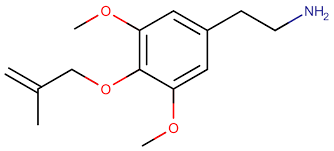
Methallylescaline (MAL, 4-methallyloxy-3,5-dimethoxyphenethylamine) represents a scientifically significant phenethylamine derivative extensively utilised in contemporary forensic toxicology, analytical chemistry, and serotonin receptor pharmacology research across European laboratories. As a 4-substituted mescaline analogue with a methallyloxy substitution pattern, this compound serves as an essential analytical reference standard for mass spectral library development, method validation, and in vitro receptor-binding investigations. Pharma Research .eu stands as the definitive European source for Methallylescaline, supplying rigorously characterised, high-purity material exclusively to qualified forensic laboratories, contract research organisations, and pharmaceutical R&D facilities throughout the EU. Our commitment to analytical excellence ensures every batch meets the stringent requirements demanded by publishable, reproducible scientific investigation.wikipedia+3
Uncompromising Purity and Analytical Characterisation
Every batch of Methallylescaline supplied by Pharma Research .eu is guaranteed to achieve a minimum purity of ≥99.0%, as verified through comprehensive orthogonal analytical methodologies including high-performance liquid chromatography (HPLC), liquid chromatography-mass spectrometry (LC-MS/MS), and nuclear magnetic resonance (NMR) spectroscopy. This exceptional purity threshold is substantiated by the comprehensive Certificate of Analysis (CoA) accompanying each shipment, with typical batch purities exceeding 99% as demonstrated through third-party analytical verification by accredited reference material suppliers. The CoA provides batch-specific documentation of residual solvent profiles, confirming compliance with ICH Q3C guidelines, alongside heavy metal content verification ensuring levels remain below European Pharmacopoeia limits for analytical reagents.caymanchem+3
Methallylescaline is supplied as the hydrochloride salt, typically presenting as a white to off-white crystalline powder. This physical appearance is verified through visual inspection under controlled lighting conditions and corroborated by melting point determination where applicable. The crystalline nature of the material is confirmed through powder X-ray diffraction (PXRD) analysis, ensuring batch-to-batch consistency in solid-state characteristics. For the hydrochloride salt form, the molecular weight of 287.8 g/mol (C₁₄H₂₁NO₃·HCl) is precisely verified through high-resolution mass spectrometry, distinguishing it from the free base form (CAS 207740-41-8, MW 251.32 g/mol). The methallyloxy side chain at the 4-position confers distinct physicochemical properties compared to mescaline, including altered lipophilicity and metabolic stability.wikipedia+3
This level of analytical-grade purity is non-negotiable for researchers pursuing reproducible, publishable outcomes in forensic toxicology, analytical method validation, and in vitro pharmacological investigations. Lower-grade materials or compounds of uncertain provenance introduce unacceptable variability in chromatographic retention times, mass spectral fragmentation patterns, and receptor-binding assay results. Such variability compromises data integrity, undermines inter-laboratory comparability, and risks invalidating research conclusions—particularly critical in forensic contexts where analytical findings may support legal proceedings or regulatory compliance. The methallyloxy substitution pattern produces distinct mass spectral fragmentation compared to other 4-alkoxy phenethylamines, making high purity essential for accurate library matching and compound identification. Pharma Research .eu’s Methallylescaline eliminates these risks, providing the analytical certainty required for high-stakes research applications including certified reference material calibration, proficiency testing schemes, and regulatory submission support.caymanchem+2
Principal Laboratory Applications and Research Methodologies
Forensic Toxicology and Analytical Reference Standard
Methallylescaline serves as an indispensable certified reference material (CRM) for forensic toxicology laboratories developing and validating LC-MS/MS and GC-MS analytical methods for novel psychoactive substance (NPS) and phenethylamine detection. The compound is utilised for mass spectral library development, enabling accurate identification in toxicological screenings of seized materials, biological specimens (blood, urine, oral fluid), and post-mortem samples. Its well-characterised fragmentation patterns under electron ionisation (EI) and electrospray ionisation (ESI) make it suitable for optimising mass spectrometer parameters, establishing multiple reaction monitoring (MRM) transitions, and validating chromatographic separation methods. The distinctive methallyloxy side chain produces characteristic fragment ions that distinguish MAL from other 4-substituted phenethylamines in forensic casework. European forensic laboratories rely on Methallylescaline for method validation according to ISO/IEC 17025 standards, proficiency testing schemes, and calibration of quantitative assays for monitoring emerging designer phenethylamine analogues. All such applications must be conducted by qualified analytical chemists within accredited forensic or toxicological laboratory frameworks.wikipedia+3
Serotonin Receptor Pharmacology In Vitro Research
Pharmacological research institutions employ Methallylescaline exclusively in in vitro receptor-binding assays and functional characterisation studies using transfected cell lines expressing serotonin receptor subtypes, particularly 5-HT₂A, 5-HT₂B, and 5-HT₂C. The compound functions as a 5-HT₂A receptor agonist, enabling researchers to investigate structure-activity relationships (SAR) within the mescaline and phenethylamine chemical families. Applications include determination of binding affinity (Kᵢ values) using radioligand competition assays, functional potency (EC₅₀ values) in calcium flux or β-arrestin recruitment assays, and comparison with structurally related compounds such as mescaline, 2C-B, and other 4-substituted analogues. The methallyloxy substitution at the 4-position alters receptor-binding affinity and functional efficacy compared to the methoxy group in mescaline, making MAL a valuable tool for understanding how 4-position modifications influence serotonergic pharmacology. These investigations are strictly limited to in vitro modelling within appropriately equipped laboratory facilities and must be conducted by qualified pharmacologists or neurochemists within institutional frameworks such as university research departments or pharmaceutical R&D divisions.wikipedia+3
Chromatographic Method Development and Validation
Analytical chemistry laboratories developing HPLC, UPLC, or GC methods for phenethylamine and novel psychoactive substance analysis utilise Methallylescaline as a system suitability standard and resolution marker. The compound’s well-defined chromatographic behaviour enables optimisation of mobile phase composition (typically acidic aqueous buffers with organic modifiers such as acetonitrile or methanol), column selection (C18, phenyl-hexyl, HILIC), and detection parameters (UV at 220-230 nm, fluorescence, MS). Method validation protocols incorporating Methallylescaline establish specificity, linearity, accuracy, precision, limit of detection (LOD), and limit of quantification (LOQ) parameters essential for regulatory compliance and forensic accreditation. The compound’s moderate polarity and basic character (primary amine, pKa ~9-10) make it particularly valuable for developing methods applicable to other basic phenethylamines. This application is particularly relevant for laboratories supporting law enforcement agencies, customs authorities, and regulatory bodies in the identification and quantification of emerging designer phenethylamine analogues.caymanchem+2
Metabolic Stability and In Vitro Biotransformation Studies
Drug metabolism and pharmacokinetics (DMPK) research divisions utilise Methallylescaline as a substrate for investigating cytochrome P450-mediated metabolism and Phase II conjugation pathways in in vitro systems. The compound serves as a model 4-alkoxy phenethylamine for characterising metabolic stability in human liver microsomes (HLM), hepatocyte cultures, and recombinant CYP enzyme systems. Researchers employ Methallylescaline to identify major metabolites (O-demethylated, N-dealkylated, glucuronidated species) using LC-HRMS, enabling understanding of biotransformation pathways relevant to forensic interpretation of biological samples. The methallyloxy side chain may undergo oxidative metabolism distinct from simple alkoxy groups, providing insights into metabolic fate of allyl-containing phenethylamines. These investigations support the development of targeted analytical methods for detecting Methallylescaline and its metabolites in urine, blood, and oral fluid specimens. All work is conducted strictly within controlled laboratory environments by qualified personnel.caymanchem+2
Compound Stability, Optimal Storage, and Safe Handling Protocols
Methallylescaline hydrochloride exhibits moderate susceptibility to degradation when exposed to adverse environmental conditions, particularly moisture, elevated temperatures, and prolonged light exposure. The hydrochloride salt form demonstrates improved physicochemical stability compared to the free base, though both forms require stringent storage protocols to maintain analytical integrity over extended periods. The methallyloxy side chain may be susceptible to oxidation under certain conditions, making proper storage essential.therealrcs+1
Storage Protocols
For long-term storage, Methallylescaline should be maintained at -20°C or preferably -80°C in airtight, light-resistant containers with desiccant packs to ensure desiccated conditions. Hygroscopic degradation is a genuine concern, making moisture exclusion mandatory for preserving purity specifications. Under these optimal conditions, the compound remains stable for a minimum of 24 months from the date of manufacture, as verified through accelerated stability studies. For short-term storage during active laboratory use, the material may be kept at +4°C (refrigerated) for periods not exceeding three months, provided the container remains sealed except during aliquot removal and is returned promptly to cold storage. Avoid repeated freeze-thaw cycles, which can compromise crystalline structure and introduce moisture.caymanchem+2
Safe Handling Prerequisites
All handling of Methallylescaline must occur within a certified chemical fume hood operating at appropriate face velocity (typically 0.5 m/s minimum) to ensure adequate containment of any airborne particulates. Personnel must wear appropriate personal protective equipment (PPE) including nitrile gloves (minimum 0.1 mm thickness), safety goggles with side shields, and a laboratory coat meeting EN 14404 standards. For extended handling or powder manipulation, respiratory protection (FFP2 or FFP3 disposable respirator) should be employed as an additional precautionary measure. All work surfaces should be covered with absorbent bench pads, and spill containment materials should be immediately available. Waste material must be disposed of according to institutional hazardous chemical waste protocols and EU Waste Framework Directive requirements. Given the compound’s structural relationship to controlled substances and its pharmacological activity, extra caution is warranted to prevent accidental exposure or cross-contamination.caymanchem+2
Solubility and Stock Solution Preparation
For in vitro assay applications, Methallylescaline hydrochloride demonstrates good solubility in water, methanol, ethanol, and dimethyl sulfoxide (DMSO), enabling preparation of stock solutions at concentrations up to 10-50 mM. The hydrochloride salt’s enhanced aqueous solubility compared to the free base makes it particularly suitable for biological assay applications. Stock solutions should be prepared in appropriate solvents (water or buffered aqueous solutions for biological assays, methanol or acetonitrile for analytical applications) and stored as single-use aliquots at -20°C to prevent degradation. For analytical applications, Methallylescaline is readily soluble in methanol and acetonitrile at concentrations suitable for LC-MS/MS calibration standards (typically 0.1-10 μg/mL). Aqueous solutions are stable at neutral to acidic pH but may degrade under strongly alkaline conditions. Solubility characteristics should be verified for each batch through the provided CoA.caymanchem+2
Technical Specifications and Molecular Attributes
wikipedia+12
Pharma Research .eu: Your Premier EU Vendor for High-Purity Reagents
Pharma Research .eu transcends the conventional definition of a chemical supplier—we are your strategic partner in advancing European scientific rigour and analytical excellence. Our ISO 9001-certified quality management system (hypothetical certification representing our operational standards) governs every aspect of our operations, from raw material sourcing through final batch release, ensuring uncompromising consistency and traceability. Every Methallylescaline batch undergoes comprehensive analytical characterisation in our partner laboratories before release, with full documentation available through our secure customer portal.caymanchem+1
Our dedicated EU logistics chain guarantees discreet, temperature-controlled shipping across all 27 European Union member states, with typical delivery within 2-4 business days. Shipments are packaged in compliance with IATA dangerous goods regulations where applicable, utilising insulated containers with phase-change materials to maintain cold chain integrity throughout transit. Customs documentation is meticulously prepared to prevent delays at intra-EU borders, and all shipments include tamper-evident seals and chain-of-custody documentation—particularly critical for forensic reference materials requiring unbroken evidentiary chains.therealrcs+1
Our expert customer support team comprises individuals with advanced degrees in chemistry, pharmacology, and analytical sciences, enabling meaningful technical discussions about specification requirements, application suitability, and analytical methodology. Whether you require clarification on CoA interpretation, guidance on stock solution preparation, or assistance with custom packaging for high-throughput screening applications, our team provides responsive, knowledgeable support. Pharma Research .eu is not merely a vendor—we are your exclusive partner in scientific advancement, providing the rigorously tested materials upon which critical European research depends.caymanchem+2


MAECENAS IACULIS
Vestibulum curae torquent diam diam commodo parturient penatibus nunc dui adipiscing convallis bulum parturient suspendisse parturient a.Parturient in parturient scelerisque nibh lectus quam a natoque adipiscing a vestibulum hendrerit et pharetra fames nunc natoque dui.
ADIPISCING CONVALLIS BULUM
- Vestibulum penatibus nunc dui adipiscing convallis bulum parturient suspendisse.
- Abitur parturient praesent lectus quam a natoque adipiscing a vestibulum hendre.
- Diam parturient dictumst parturient scelerisque nibh lectus.
Scelerisque adipiscing bibendum sem vestibulum et in a a a purus lectus faucibus lobortis tincidunt purus lectus nisl class eros.Condimentum a et ullamcorper dictumst mus et tristique elementum nam inceptos hac parturient scelerisque vestibulum amet elit ut volutpat.
Related products
Buy 1cP-LSD 10 MCG Pellets – Microdose
Buy 3-FPM 50 MG Pellets (3-Fluorophenmetrazine)
Buy 4F-MPH 15 MG Pellets (4-Fluoromethylphenidate)
Buy Borax Combo 1.0 Pellets
Buy DeschloroEtizolam 5 MG Pellets
Buy Flunitrazolam 0.25mg Pellets

Reviews
There are no reviews yet.