
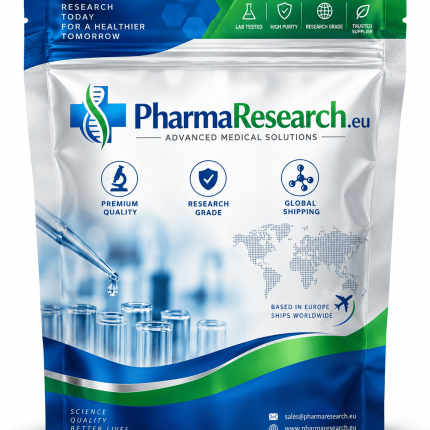
Buy Noopept Pure
Price range: €19.95 through €74.95
Noopept Pure is a documented laboratory reagent for analytical method development and controlled in vitro research. Pharma Research .eu supplies batch-traceable material with CoA and SDS documentation, subject to applicable EU chemical requirements.
| Quantity |
1 gram ,5 grams |
|---|
Buy Noopept Pure for Advanced Laboratory Research in Europe
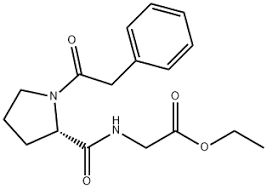
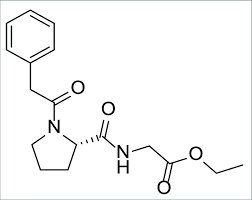
Noopept Pure, also known as GVS-111 or omberacetam, is a synthetic small molecule identified as N-phenylacetyl-L-prolylglycine ethyl ester. It is of interest as an analytical reference standard, chemical synthesis substrate, and reagent for controlled in vitro investigations. Pharma Research .eu can supply this compound for qualified European laboratories, subject to applicable REACH, CLP, SDS, institutional procurement, and end-use requirements. Noopept is listed with CAS 157115-85-0, molecular formula C₁₇H₂₂N₂O₄, and molecular weight approximately 318.37 g/mol.pubchem.ncbi.nlm.nih+1
Uncompromising Purity and Analytical Characterisation
Noopept Pure should be marketed only with a batch-specific, verifiable specification. Unless the supplier’s current CoA confirms otherwise, the appropriate product-page claim is typical purity: ≥98.0% by HPLC, rather than an unsupported ≥99% guarantee. Commercial analytical references commonly specify Noopept at ≥98% HPLC purity.
Every batch supplied by Pharma Research .eu should be accompanied by a certificate of analysis identifying the lot number, test date, measured assay, analytical method, and acceptance criteria. The CoA should also identify the compound by CAS number and confirm its identity by an appropriate technique such as LC-MS, HPLC retention-time comparison, NMR, or another validated laboratory method. A product page should not claim that a particular technique was used unless the corresponding report is available for inspection.
For procurement and method-validation purposes, the CoA should address relevant impurities and contaminants, including:
-
Residual solvents, reported against documented internal or pharmacopoeial limits where applicable.
-
Elemental impurities or heavy metals, with the tested elements and reporting limits clearly stated.
-
Water or loss-on-drying results where moisture could affect analytical performance.
-
Chromatographic impurity profiling and the principal degradation or related-substance peaks.
-
Identity confirmation and batch traceability.
Noopept is generally described in supplier literature as a white or off-white powder or crystalline solid. The stated appearance should be treated as a batch-release observation, not as a substitute for identity testing. Visual inspection can identify gross discolouration, agglomeration, or foreign matter, but it cannot establish chemical purity.
High-purity material is important when Noopept is used as an analytical reference standard, reaction substrate, or comparator in an in vitro assay. Uncharacterised impurities may alter chromatographic peak areas, affect mass-spectral interpretation, interfere with reaction monitoring, or create apparent assay variability. Lower-grade industrial material may have less rigorous identity testing, broader impurity limits, and incomplete traceability. For publishable work, laboratories should retain the CoA, SDS, raw analytical data, sample-preparation records, and chain-of-custody information.
The phrase “pure” should therefore be interpreted as a defined, documented batch specification rather than an absolute claim. Pharma Research .eu should display the actual purity value and analytical method for each lot, allowing laboratory managers to compare the material with their method-validation requirements before purchase.
Principal Laboratory Applications and Research Methodologies
Noopept Pure may be relevant to several controlled laboratory workflows, provided that the work is lawful, institutionally approved, and conducted by qualified personnel.
Chemical synthesis and reaction monitoring. Noopept can serve as a characterised synthetic small molecule for analytical comparison, impurity profiling, or method-development exercises. Researchers may use it to evaluate chromatographic separation, establish retention-time behaviour, investigate hydrolysis or degradation pathways, or compare reaction-monitoring conditions. LC-UV, LC-MS, and NMR can be used to assess identity and chemical changes during a controlled experiment.
Analytical chemistry and reference-standard development. A characterised Noopept batch may be used as a laboratory reference material for developing and validating chromatographic methods. Potential workflows include calibration-response assessment, system-suitability testing, selectivity studies, repeatability testing, recovery experiments, and forced-degradation investigations. Laboratories should distinguish an in-house reference material from a formally certified reference material: the latter requires assigned values, uncertainty evaluation, traceability, and certification documentation.
Mass-spectrometric method development. Noopept can be evaluated using LC-MS or LC-MS/MS to establish precursor-ion and product-ion behaviour, retention characteristics, isotope patterns, and matrix effects. This can support internal spectral libraries, compound-confirmation workflows, and analytical-method development. Any claimed transition ions, collision energies, detection limits, or recovery values should be experimentally established rather than copied from a vendor description.
In vitro biochemical or pharmacological modelling. Where permitted by the relevant institution and applicable law, qualified researchers may investigate Noopept in cell-free or cellular laboratory models. Such work could include exploratory binding, uptake, stability, or metabolism experiments using defined in vitro systems. Results from these models should not be represented as clinical, therapeutic, or real-world performance evidence. Appropriate controls, solvent controls, concentration verification, assay validation, and laboratory risk assessments are essential.
All applications are restricted to controlled laboratory research. Work should be performed by qualified personnel within an appropriate institutional framework, such as a university, contract research organisation, pharmaceutical R&D facility, or analytical laboratory. Procurement teams should verify whether additional national restrictions apply before placing an order. EU chemical suppliers must also consider applicable REACH responsibilities and CLP classification, labelling, and packaging obligations.environment.ec.europa+1
Compound Stability, Optimal Storage, and Safe Handling Protocols
Supplier safety information commonly recommends keeping Noopept tightly closed and storing it in a freezer; one EU SDS specifies freezer storage, while another supplier SDS recommends approximately −20°C in a dry, well-ventilated location. The product-specific SDS and CoA should take precedence over generic catalogue guidance.tcichemicals+1
For unopened material, a practical laboratory protocol is:
-
Store the solid at approximately −20°C for long-term retention.
-
Keep the container tightly sealed and protected from moisture.
-
Allow the sealed container to reach room temperature before opening to reduce condensation.
-
Minimise repeated freeze–thaw cycles and unnecessary exposure to laboratory humidity.
-
Protect from direct light where the supplier’s stability data do not establish light tolerance.
-
Record opening dates, storage excursions, and preparation details.
For short-term working storage, laboratories may use approximately +4°C only when supported by the supplier’s stability data and when the material remains sealed, dry, and protected from contamination. Long-term storage at −20°C is a commonly stated supplier recommendation, but −80°C should not be presented as mandatory without validated stability data.focusbiomolecules+1
Noopept powder should be handled in a certified chemical fume hood or equivalent local-exhaust enclosure where dust may be generated. Minimum precautions should include a closed laboratory coat, suitable nitrile gloves, chemical splash goggles, and appropriate waste-containment procedures. Avoid creating airborne dust, direct skin or eye contact, and uncontrolled release into drains. The applicable SDS should be reviewed before handling, and the laboratory should determine whether additional respiratory protection or engineering controls are required.
Available catalogue data describe Noopept as soluble in DMSO, with one listing reporting solubility up to approximately 25 mg/mL. This should be treated as a supplier-reported value rather than a universal formulation guarantee. Laboratories should confirm solubility experimentally, use anhydrous solvent where required by the method, prepare solutions gravimetrically or volumetrically, and document the final solvent percentage. Stock-solution stability should be established independently; a DMSO solution should not automatically be assumed to have the same stability as the dry solid
Technical Specifications and Molecular Attributes
The formula, CAS number, and molecular weight are reported consistently across PubChem and commercial analytical-reference listings. Exact mass is calculated from the elemental composition and should not be confused with average molecular weight.pubchem.ncbi.nlm.nih+2
Pharma Research .eu: Your Premier EU Vendor for High-Purity Reagents
Pharma Research .eu can position Noopept Pure as a documentation-led laboratory reagent for European analytical and research procurement. The strongest value proposition is transparent specification control: clear lot identification, accessible CoA and SDS documentation, defined packaging, responsive technical support, and communication that distinguishes verified data from catalogue estimates.
Any claim that Pharma Research .eu operates an ISO 9001-certified quality-management system, provides temperature-controlled logistics, or ships to every EU member state should be published only where current certificates, logistics procedures, and destination-specific compliance checks substantiate it. A compliant product page may state that shipping is subject to applicable customs, transport, REACH, CLP, and national requirements. Packaging and transport conditions should follow the current SDS and the carrier’s rules for the classified material.
For laboratory managers, useful support includes confirmation of available lot documentation, purity method, packaging size, storage recommendations, transport conditions, and whether the product is supplied as an analytical reference material or as a research reagent. Pharma Research .eu should also provide a clear statement that buyers remain responsible for institutional approval, laboratory risk assessment, lawful use, and compliance with applicable European and national requirements.


MAECENAS IACULIS
Vestibulum curae torquent diam diam commodo parturient penatibus nunc dui adipiscing convallis bulum parturient suspendisse parturient a.Parturient in parturient scelerisque nibh lectus quam a natoque adipiscing a vestibulum hendrerit et pharetra fames nunc natoque dui.
ADIPISCING CONVALLIS BULUM
- Vestibulum penatibus nunc dui adipiscing convallis bulum parturient suspendisse.
- Abitur parturient praesent lectus quam a natoque adipiscing a vestibulum hendre.
- Diam parturient dictumst parturient scelerisque nibh lectus.
Scelerisque adipiscing bibendum sem vestibulum et in a a a purus lectus faucibus lobortis tincidunt purus lectus nisl class eros.Condimentum a et ullamcorper dictumst mus et tristique elementum nam inceptos hac parturient scelerisque vestibulum amet elit ut volutpat.
Related products
Buy Chem-mist NOOPEPT 1.5 MG Spray Bubblegum
Buy IPPH (Isopropylhenidate)
Buy Isopropylphenidate (IPPH) 25 MG Pellets
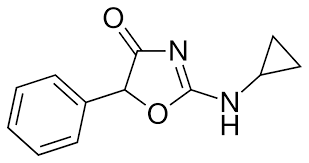
Buy N-Methyl-Cyclazodone
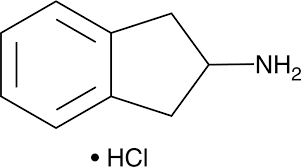
Buy NM-2-AI HCl Pure

Reviews
There are no reviews yet.