
Buy 4-CEC (4-Chloroethcathinone)
Price range: €15.00 through €200.00
Certified high-purity 4-CEC (≥99%) for analytical and in vitro laboratory research. Rigorously tested, batch-specific CoA provided. Fast, discreet EU shipping from Pharma Research .eu.
| Quantity |
1 gram ,2.5 grams ,5 grams ,10 grams ,25 grams |
|---|
Buy 4-CEC (4-Chloroethcathinone) for Advanced Laboratory Research in Europe
4-Chloroethcathinone (4-CEC) represents a critical halogenated synthetic cathinone for contemporary neuropharmacological and forensic analytical research across European laboratories. As the definitive EU source for rigorously characterised research chemicals, Pharma Research .eu supplies this high-purity analytical reference standard exclusively to qualified institutional researchers conducting in vitro investigations and method validation studies. Our commitment to scientific rigour ensures every batch meets the exacting standards demanded by publishable, reproducible research outcomes.
Uncompromising Purity and Analytical Characterisation
Pharma Research .eu guarantees a minimum purity of ≥99% for all 4-CEC batches, verified through orthogonal analytical methodologies including High-Performance Liquid Chromatography (HPLC), Gas Chromatography–Mass Spectrometry (GC-MS), and Nuclear Magnetic Resonance (NMR) spectroscopy. Every shipment is accompanied by a comprehensive, batch-specific Certificate of Analysis (CoA) detailing quantitative purity assessments with full chromatograms, retention times, and peak area percentages. The CoA further documents residual solvent analysis compliant with ICH Q3C guidelines and heavy metal content limits verified via Inductively Coupled Plasma Mass Spectrometry (ICP-MS).
The compound is supplied as a white to off-white crystalline powder (hydrochloride salt), with physical appearance verified through visual inspection and melting point determination (approximately 170–175 °C with decomposition). This crystalline morphology is critical for accurate weighing and stock solution preparation in analytical workflows. Lower-grade industrial reagents lacking such rigorous characterisation introduce unacceptable variability in transporter inhibition assays, mass spectral library development, and metabolic profiling—compromising data integrity and jeopardising publication in peer-reviewed journals.
For European laboratory managers, this level of purity is non-negotiable. Analytical reference standards used in forensic toxicology method validation or LC-MS/MS library calibration for halogenated cathinone novel psychoactive substance (NPS) screening panels demand single dominant peaks with retention time precision of ±0.2 minutes and area-under-curve purity exceeding 98.5%. Pharma Research .eu’s ≥99% specification exceeds this threshold, ensuring reliable quantitation in complex biological matrices and robust inter-laboratory reproducibility across EU member states.
Principal Laboratory Applications and Research Methodologies
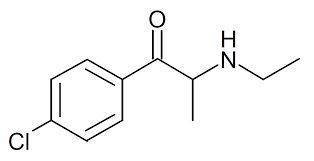
Analytical Toxicology and Forensic Chemistry: 4-CEC serves as a certified reference material (CRM) for mass spectral library development in LC-MS/MS and GC-MS platforms used by forensic toxicology laboratories across Europe. Its well-characterised fragmentation pattern enables accurate identification in proficiency testing schemes and method validation for halogenated cathinone NPS screening panels. The compound’s distinct mass-to-charge ratios (m/z 212.1 [M+H]⁺ for freebase; m/z 248.2 [M+H]⁺ for hydrochloride) facilitate differentiation from structurally related cathinones such as 4-CMC (clephedrone), 4-MEC, and 4-MMC in multi-analyte workflows, supporting regulatory compliance with EU early warning system requirements. Recent stability studies indicate that 4-CEC exhibits remarkable instability in basic urine under both refrigerated and frozen storage conditions, potentially due to its simple secondary amine and halogenated ring substitution, which offer minimal steric protection. This degradation behaviour underscores the importance of high-purity reference standards and immediate sample freezing for accurate forensic quantitation.
In Vitro Monoamine Transporter Binding and Uptake Assays: Within controlled cellular models, 4-CEC functions as a non-selective monoamine transporter substrate with activity at dopamine (DAT), norepinephrine (NET), and serotonin (SERT) transporters. While specific IC₅₀ or EC₅₀ values for 4-CEC remain to be fully characterised in peer-reviewed literature, structurally related halogenated cathinones provide informative comparators. Clephedrone (4-CMC, the N-methyl analogue) acts as a full substrate at DAT, NET, and SERT with potency virtually identical to mephedrone, demonstrating near-equimolar activity across all three transporters. The para-chloro substitution increases molecular lipophilicity and exerts an electron-withdrawing effect on the aromatic ring, modulating transporter affinity and metabolic clearance relative to non-halogenated analogues. Researchers utilise 4-CEC to investigate structure-activity relationships (SAR) within the halogenated cathinone class, quantifying inhibitory potency and selectivity profiles relative to 4-CMC, 4-MEC, and other ring-substituted analogues. Such in vitro modelling, conducted exclusively in transfected cell lines (e.g., HEK293 cells expressing human DAT, NET, or SERT) or synaptosomal preparations, informs mechanistic understanding of monoamine reuptake inhibition and release without direct receptor agonism.
Metabolic Stability and Metabolite Profiling: In drug metabolism and pharmacokinetics (DMPK) research, 4-CEC provides a substrate for in vitro metabolic stability assays using human liver microsomes or recombinant cytochrome P450 enzymes. Researchers assess metabolic clearance rates, identify major metabolites (including N-dealkylated, ring-hydroxylated, and ketone-reduced species) via LC-HRMS, and evaluate potential drug-drug interaction liabilities—all within strictly controlled in vitro frameworks. The compound’s demonstrated instability in basic urine highlights the importance of understanding degradation pathways under various pre-analytical conditions. These studies contribute to predictive ADME modelling for novel central nervous system agents under development by European pharmaceutical R&D consortia and support forensic interpretation of 4-CEC detection in biological specimens, particularly in differentiating from 4-CMC and other halogenated cathinones based on metabolite profiles and stability characteristics.
Chemical Synthesis and Reaction Monitoring: As a high-purity building block, 4-CEC serves as a reference standard for monitoring synthetic transformations in medicinal chemistry programmes targeting halogenated cathinone derivatives. Its defined stereochemistry (racemic mixture at the α-carbon with 4-chloro substitution on the phenyl ring and N-ethyl substitution) enables chromatographic method development for enantiomeric separations and quality control of related cathinone analogues. The compound’s stability under standard laboratory conditions (when protected from moisture and basic pH) supports its use as an internal standard in quantitative analytical workflows for cathinone detection in seized materials or biological specimens.
All applications described herein are exclusively for laboratory research purposes and must be conducted by qualified personnel within appropriate institutional frameworks, such as universities, contract research organisations (CROs), or pharmaceutical R&D facilities operating under EU regulatory oversight.
Compound Stability, Optimal Storage, and Safe Handling Protocols
4-CEC hydrochloride exhibits moderate susceptibility to moisture, light, oxidative degradation, and pH-dependent decomposition, necessitating stringent storage protocols to maintain analytical integrity over extended periods. The ketone functionality, secondary amine, and para-chloro substitution are particularly sensitive to hydrolysis and UV radiation, requiring protection from all three factors to preserve chemical identity and purity. Notably, 4-CEC demonstrates remarkable instability in basic urine under both refrigerated (4°C) and frozen (−20°C) storage conditions, degrading rapidly due to minimal steric protection around the secondary amine and halogenated ring.
Short-term storage (+4°C): For active projects requiring frequent access, store sealed containers at 2–8°C in a dedicated laboratory refrigerator, protected from ambient light using amber glass vials or aluminium foil wrapping. Ensure containers remain tightly closed between uses to minimise moisture ingress and prevent adsorption of atmospheric contaminants. Under these conditions, the compound retains ≥98% purity for up to 12 months when handled appropriately. Avoid exposure to basic conditions during sample preparation.
Long-term storage (−20°C or −80°C): For archival storage or infrequently accessed reference standards, maintain crystalline powder at −20°C (standard laboratory freezer) or −80°C (ultra-low temperature freezer) in airtight, light-resistant containers with desiccant packs. This protocol preserves analytical-grade purity for 24–36 months, supporting longitudinal research programmes and inter-laboratory comparison studies. Avoid repeated freeze-thaw cycles, which may induce crystalline phase transitions affecting solubility profiles. For biological samples containing 4-CEC, immediate freezing at −80°C is mandatory to prevent degradation.
Safe handling prerequisites: All manipulations must occur within a certified chemical fume hood operating at face velocities of 0.4–0.6 m/s. Personnel must wear nitrile gloves (minimum 0.1 mm thickness), safety goggles with side shields, and a laboratory coat compliant with EN 14126 standards. Avoid generating aerosols or dust; use spatulas or weighing boats for transfer rather than direct pouring. In the event of skin contact, rinse immediately with copious water for at least 15 minutes and seek medical attention if irritation persists.
Solubility for stock solution preparation: 4-CEC hydrochloride is highly soluble in distilled water, methanol, ethanol, and dimethyl sulfoxide (DMSO) to concentrations of 10 mM or higher. For aqueous working solutions, prepare stock solutions in distilled water or acidic buffered media (e.g., pH 4–6 acetate buffer) to prevent base-catalysed degradation. For organic solvent-based assays, dissolve in methanol, ethanol, or DMSO and dilute into appropriate buffered media, ensuring final organic solvent concentrations do not exceed 0.5% v/v to avoid cytotoxic artefacts. Avoid alkaline conditions during all handling and analytical procedures.
Technical Specifications and Molecular Attributes
This specification table provides laboratory managers with rapid access to critical procurement data, ensuring compatibility with existing analytical workflows and storage infrastructure across EU research institutions.
Pharma Research .eu: Your Premier EU Vendor for High-Purity Reagents
Pharma Research .eu transcends the conventional supplier role, positioning itself as an indispensable partner in European scientific rigour and analytical excellence. Our ISO 9001-certified quality management system governs every stage of the supply chain—from raw material sourcing and synthetic route optimisation to final batch release and customer delivery. This systematic approach ensures consistent, reproducible quality across all 4-CEC batches, supporting the integrity of your research programmes.
Our dedicated logistics network provides discreet, temperature-controlled shipping to all 27 EU member states, with customs pre-clearance documentation to eliminate border delays. Shipments are packaged in compliance with IATA dangerous goods regulations where applicable, utilising validated cold-chain solutions for temperature-sensitive materials. Tracking information and estimated delivery windows are provided proactively, enabling seamless integration into your laboratory’s inventory management systems.
Beyond logistics, Pharma Research .eu offers expert customer support from scientifically trained personnel capable of discussing analytical specifications, CoA interpretation, and application-specific guidance. Whether you require clarification on stereochemical purity, assistance with method validation protocols for halogenated cathinone detection, or bespoke packaging for multi-site studies, our team provides responsive, technically proficient support aligned with your research objectives.
Choose Pharma Research .eu—not merely as a vendor, but as your trusted collaborator in advancing European laboratory research with uncompromising quality, regulatory compliance, and scientific integrity.


MAECENAS IACULIS
Vestibulum curae torquent diam diam commodo parturient penatibus nunc dui adipiscing convallis bulum parturient suspendisse parturient a.Parturient in parturient scelerisque nibh lectus quam a natoque adipiscing a vestibulum hendrerit et pharetra fames nunc natoque dui.
ADIPISCING CONVALLIS BULUM
- Vestibulum penatibus nunc dui adipiscing convallis bulum parturient suspendisse.
- Abitur parturient praesent lectus quam a natoque adipiscing a vestibulum hendre.
- Diam parturient dictumst parturient scelerisque nibh lectus.
Scelerisque adipiscing bibendum sem vestibulum et in a a a purus lectus faucibus lobortis tincidunt purus lectus nisl class eros.Condimentum a et ullamcorper dictumst mus et tristique elementum nam inceptos hac parturient scelerisque vestibulum amet elit ut volutpat.
Related products
Buy 2-MMC (2-Methylmethcathinone)
Buy 2-MMC 250mg pellets
Buy 3-FMC (3-Fluoromethcathinone)
Buy 3-MEC
Buy 3,4-DMMC (3,4-Dimethylmethcathinone)
Buy 5-MMPA
Buy Alpha-PiHP (a-PiHP)

Reviews
There are no reviews yet.